 العربية


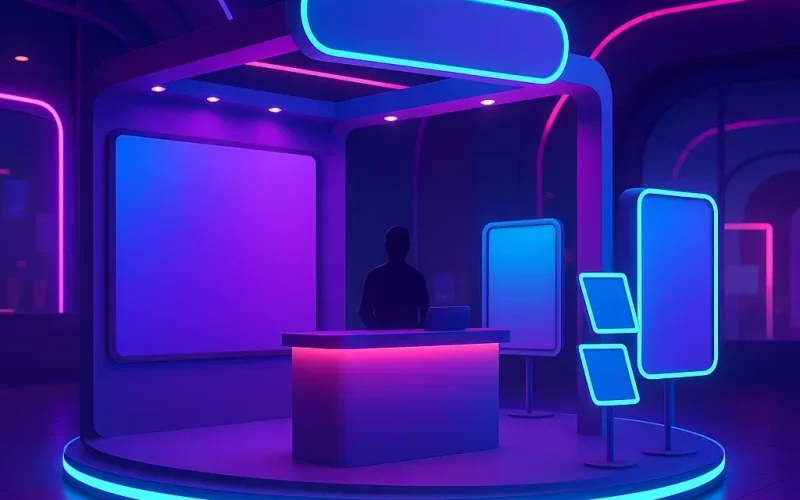
Virtual Exhibitions: The Future of Events We Live Today
In a world of accelerating digital transformation, events and exhibitions are no longer confined to large halls and physical gatherings. Technology has opened new horizons, giving birth to Virtual Exhibitions as an innovative alternative. They have quickly proven to be not just a temporary solution, but the future of events taking shape before our eyes. They represent a paradigm shift in how companies interact with their audience, how knowledge is shared, and how products and services are showcased, transcending all geographical and logistical boundaries that once constrained traditional exhibitions.
The need for innovative solutions in event organizing emerged as obstacles to travel and large gatherings increased. Here, Virtual Exhibitions were not merely a response to these challenges, but a natural evolution driven by tremendous technological advancement. Through sophisticated platforms, immersive 3D environments, and augmented and virtual reality technologies, it has become possible to recreate the exhibition experience in all its detail, and even enrich it with unique digital advantages that make it more attractive and effective. Participating in an international exhibition no longer requires expensive airline tickets or complicated hotel bookings; it is now just a click away, accessible to everyone, anytime, anywhere.
What Are Virtual Exhibitions and Why Are They the Future?
Virtual Exhibitions are online simulated environments that allow exhibitors and visitors to interact in a digital space. Exhibitors can create virtual booths to display their products and services through videos, digital brochures, and 3D models. Meanwhile, visitors can tour these booths, attend live webinars, participate in workshops, and communicate instantly with exhibitors and other professionals from around the world.
Calling them the “future of events” is not an empty phrase; it is based on a set of fundamental advantages they offer that surpass their traditional counterparts.

Breaking the Barriers of Time and Space
Perhaps the most obvious advantage is their ability to reach an unlimited global audience. Attendance is no longer limited to those who can travel, opening the door for companies to access new markets and potential customers that were previously unreachable. Furthermore, exhibition materials can remain available 24/7 for an extended period after the live event ends, giving visitors unprecedented flexibility to access content at their convenience.

Reducing Costs and Increasing Return on Investment
Traditional exhibitions require huge budgets that include costs for space rental, booth construction, shipping, travel, and accommodation. In contrast, Virtual Exhibitions significantly reduce these expenses, making participation possible even for startups and small businesses. This cost reduction, coupled with broad global reach, translates directly into a higher return on investment (ROI).

Immersive Interactive Experience: Technology in Service of Communication
Some may think that the digital environment lacks human interaction, but modern Virtual Exhibition platforms have proven otherwise. They are designed to maximize engagement and interaction through:
- Live Webinars: Interactive sessions with industry experts with the ability for immediate Q&A.
- Interactive Workshops: Hands-on learning experiences where participants can interact directly.
- Live Chat and Video: Instant communication between visitors and exhibitors to simulate face-to-face conversations.
- Networking Lounges: Virtual rooms dedicated to networking among attendees and exchanging digital business cards.
- Gamification: Adding competitive elements and rewards to encourage visitors to explore more booths and interact with content.
Accurate Data and Deep Insights: A Priceless Advantage
Unlike traditional exhibitions where performance is difficult to measure accurately, Virtual Exhibitions provide a treasure trove of analyzable data. Organizers and exhibitors can track every interaction that occurs on the platform, providing valuable insights into audience behavior.
Performance Data Table in Virtual Exhibitions
This data not only helps in measuring the success of the current event but also provides strategic information to improve future participations and tailor follow-up efforts with potential clients.
Search Engine Optimization (SEO): A Strategy to Attract the Audience
To ensure the success of any online event, it must be easy to find. This is where Search Engine Optimization (SEO) plays a crucial role in promoting the exhibition. Through a well-thought-out SEO strategy, a target audience actively searching for related topics and events can be attracted.
List of SEO Best Practices for Promoting Virtual Exhibitions:
- Keyword Targeting: Focus on specific keywords such as “Virtual Exhibitions in technology” or “virtual digital marketing conference” and use them in all event-related content.
- Dedicated Landing Page: Create an SEO-optimized landing page containing all exhibition details, agenda, speakers, and registration forms.
- Content Marketing: Write blog posts, press releases, and case studies on exhibition topics, including backlinks to the registration page.
- Leveraging Structured Data (Schema Markup): Use “Event Schema” markup to help Google understand the event details (date, virtual location, price) and display them as rich results in search.
- Social Media Promotion: Regularly share content on platforms where the target audience is present to increase awareness and drive traffic to the exhibition’s website.
Challenges and Future Trends
Despite all the advantages, there are still challenges facing the full adoption of Virtual Exhibitions, such as “Digital Fatigue” and the need for a strong technological infrastructure for participants. However, future developments promise to overcome these obstacles.
We expect to see deeper integration of Virtual Reality (VR) and Augmented Reality (AR) technologies to create more realistic and immersive experiences, where a visitor can virtually “walk” through the exhibition hall using a VR headset. Artificial intelligence will also play a larger role in personalizing the visitor experience by suggesting the most relevant booths and seminars based on their interests and facilitating smart networking processes.
The future of events will not be entirely physical or virtual, but hybrid. Hybrid events will combine the best of both worlds: the physical presence of a group of people, with remote participation and interaction available to a wider global audience. This hybrid model will make Virtual Exhibitions a fundamental and permanent component in the strategy of any successful event.
Conclusion
In conclusion, Virtual Exhibitions are no longer a secondary option but have become a cornerstone of the global events industry. Thanks to their ability to transcend borders, save costs, provide accurate data, and offer rich interactive experiences, they undoubtedly represent the future of events. The companies and institutions that embrace this digital transformation and invest in building a strong presence in the world of Virtual Exhibitions will be at the forefront of the competition, able to reach their audience wherever they are, and build stronger, more sustainable relationships in an increasingly interconnected world.