 العربية


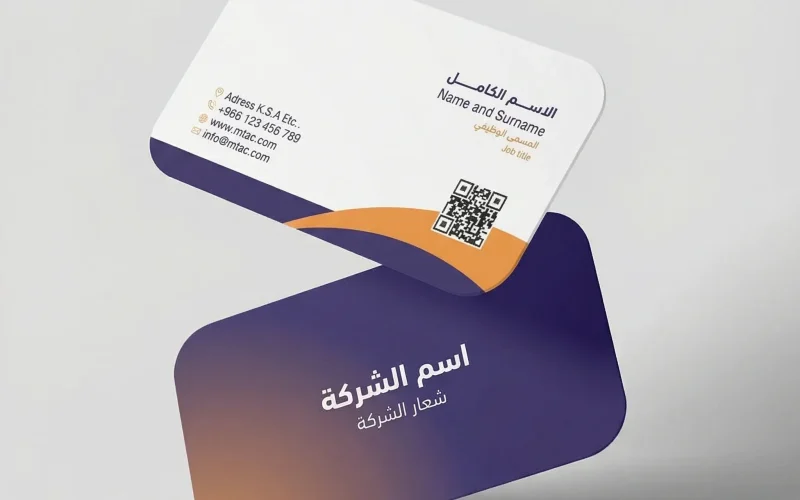
In the world of startups and freelancing, competition does not stop at the quality of your service or product; it begins from the very first moment a client sees you and interacts with you. A business card here is not a “small detail,” but a fast marketing tool that delivers an immediate impression of your professionalism, clarity, and confidence. When you choose a distinctive, well-thought-out approach, the card becomes a conversation starter, makes you easier to remember, and encourages the client to take a clear next step to contact you.
In this article, you’ll find innovative ideas for card design suitable for startups and freelancers, with practical guidelines to help you execute creative concepts without exaggeration or distraction. You’ll also find comparison tables for choosing the right size, content, finishes, and the best ways to leverage QR codes and visual identity to your advantage—in a clear, professional style.
Why do startups and freelancers need innovative ideas for card design?
Startups often do not have large marketing budgets, and freelancers rely on trust and first impressions as a decisive factor. Business cards are used in quick meetings, exhibitions, events, business appointments, and even while delivering a service. If the card is too traditional, overcrowded, or weak in its message, many opportunities will be lost without you realizing it.
But when you adopt innovative ideas for card design in a smart way, you achieve three key benefits:
- Standing out without having to explain too much.
- Increasing memorability because the card becomes “distinctive and easy to understand.”
- Turning the card into a “gateway” that leads the client to your website, portfolio, or booking page.
The golden rule: innovation should serve the goal, not steal attention
True innovation in a business card is not about an unusual shape; it is about solving a client’s problem: How can they contact you easily? How can they understand your specialty quickly? How will they remember you after a week? Before choosing an idea, ask yourself:
- What action do I want the client to take after receiving the card?
- Do I want a quick call, a website visit, a booking, or a follow on a platform?
- What is the single most important piece of information that should stay in their mind?
When the answer is clear, selecting innovative ideas for card design becomes easier and more precise.
Innovative card design ideas based on your marketing goal
There are multiple schools of innovation. Some rely on “smart content,” others on “interaction,” and others on “finishing.” Here is a set of strong ideas suitable for an Arab market without unnecessary complexity.
1) A one-line card with a strong message
Instead of overcrowding the design with details, use a highly concise statement that communicates your value in a single line, with limited contact options. This idea is especially effective for freelancers in design, marketing, development, and consulting.
2) A two-sided card: quick identity + services in bullet points
The first side focuses on identification (name/title/logo), while the second presents 3–5 services in short bullet points. This can replace a long conversation and gives the client a clear picture.
3) A card with a QR code that leads to a one-page profile built specifically for the card
Instead of directing the client to a large website, make the QR code lead to a streamlined page that includes: a short intro, selected work, a WhatsApp button, a booking button, and essential links. This is one of the most suitable innovative ideas for card design for startups because it is measurable.
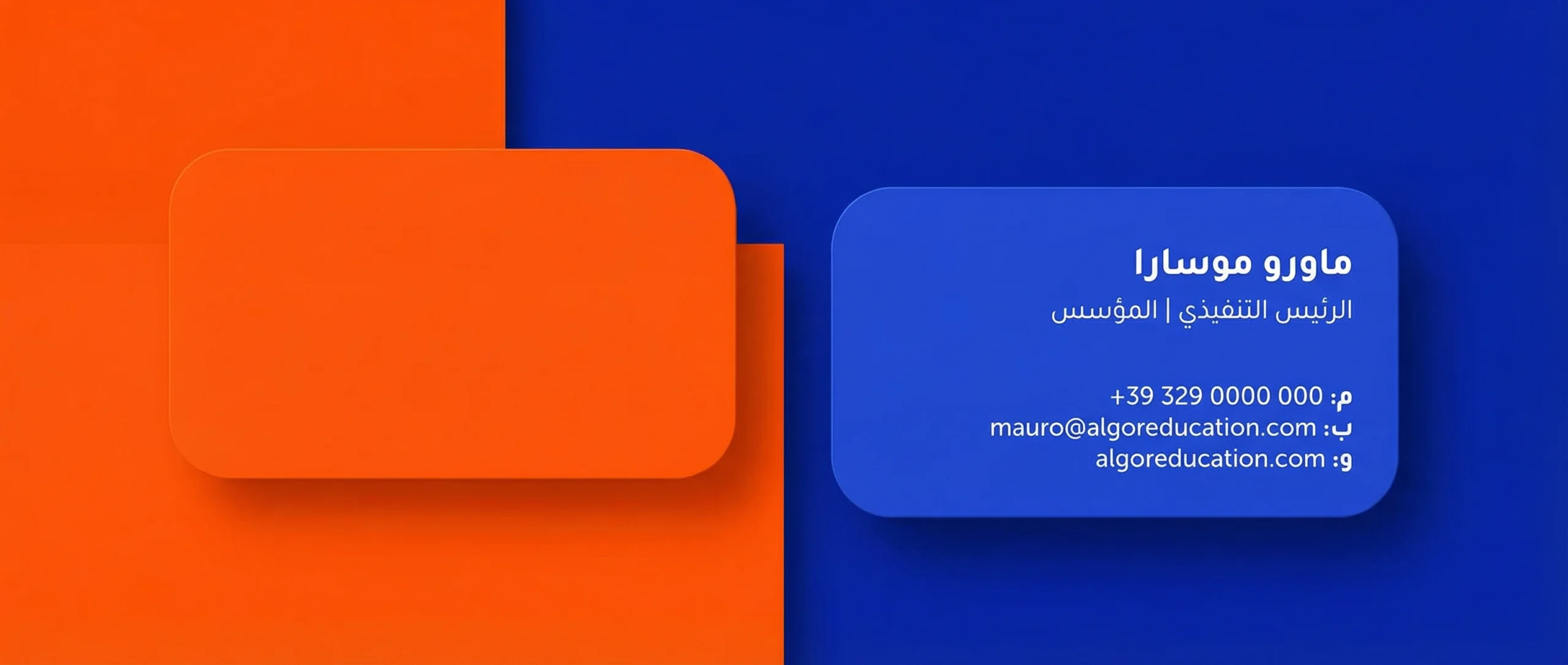
4) A single bold color with high contrast
Sometimes innovation is bold simplicity: one primary brand color plus clear black/white text. This approach conveys strength and confidence, especially for tech brands.
5) A “social-network” card—but smart
Instead of listing all your accounts, choose only the one channel that matters most for your sales (LinkedIn for professionals, Instagram for visual products, TikTok for fast content). Present it clearly with a simple icon and your handle.
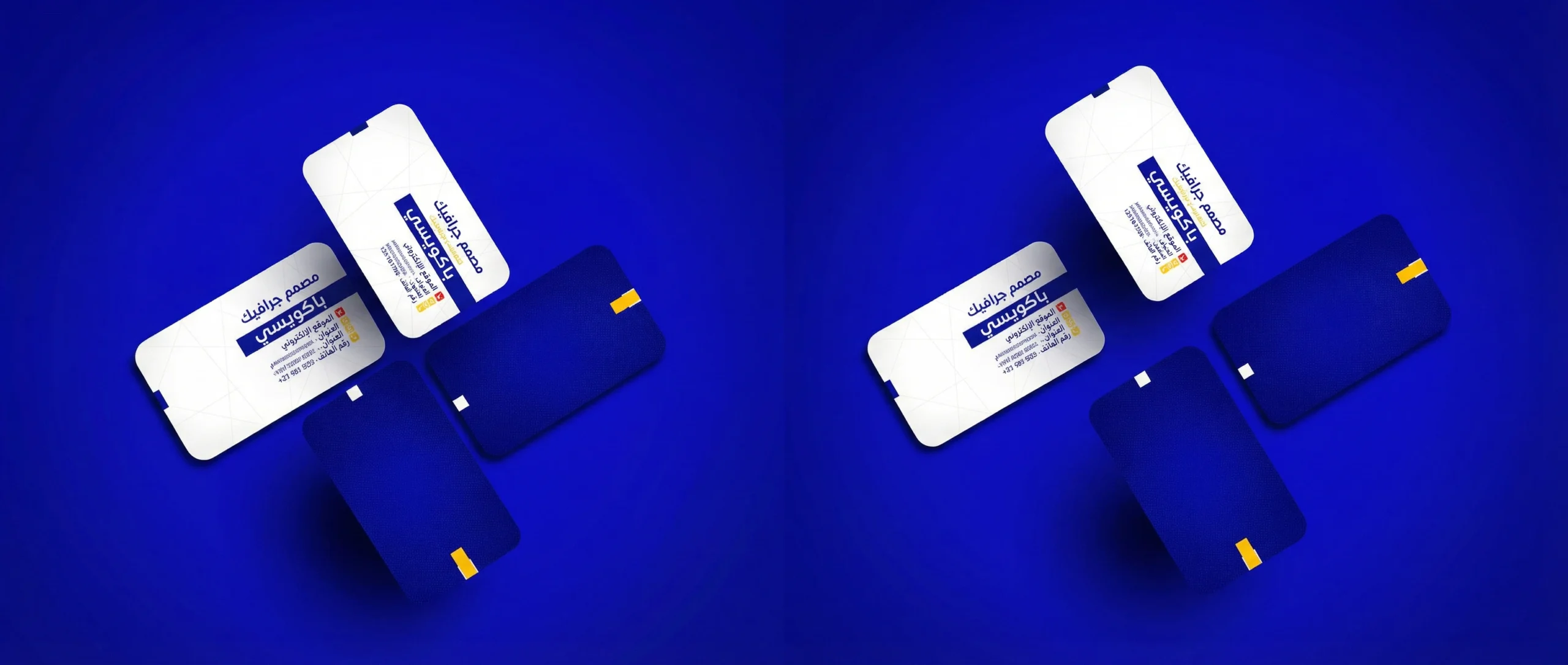
6) Rounded corners or a subtle custom cut
A small change in the card’s cut can make it stand out in a client’s wallet—provided it does not affect convenience or raise costs excessively.
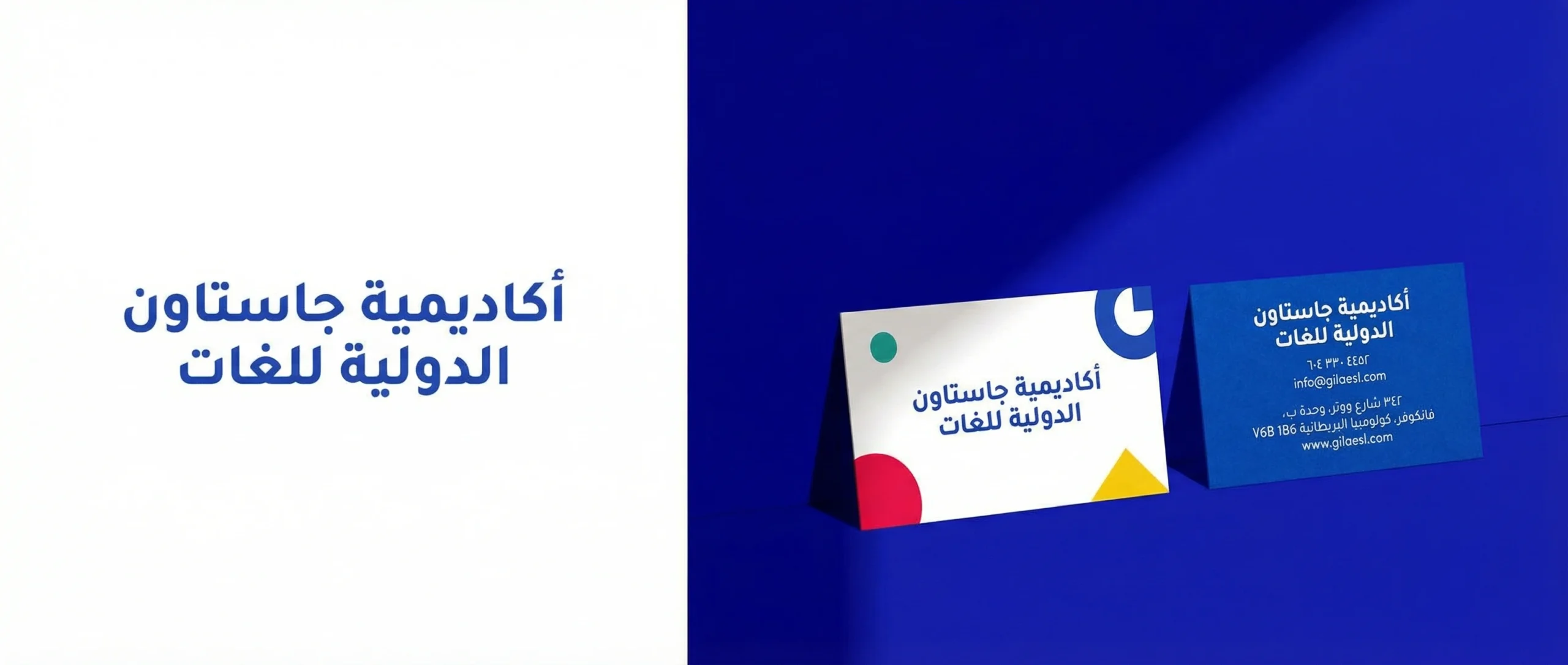
7) A split card: Arabic on one side and English on the other
For startups targeting two markets or a diverse audience, this practical solution increases professionalism and avoids language clutter on a single side.
8) A partially transparent look or Spot UV on a specific element
The innovation here is tactile and visual. You can highlight only the logo or the name with a special finish instead of making the entire print expensive.
9) A card with a clear call to action: Book / Contact / Try / View work
This is more of a marketing idea than a purely design idea, but it makes a big difference: include a call to action aligned with your goal.
10) A “professional identity” card for freelancers: specialty + value + outcome
A concise line like “UI design that boosts conversions” or “Content that increases store sales” gives the client a reason to contact you now.
This set delivers innovative ideas for card design without turning the card into a complex or expensive project.
Table: Choosing the right idea based on your work type
| Work Type | Suitable Idea | Why It Works | Execution Note |
|---|---|---|---|
| Freelancer (Design/Development) | QR to portfolio + value line | Clients want examples quickly | A dedicated QR landing page is better than a general website |
| Tech Startup | Bold color + simplicity + LinkedIn | Conveys trust and professionalism | Focus on contrast and readability |
| New Retail/Shop | Back side: services/products + WhatsApp | Accelerates ordering | Make WhatsApp the primary contact |
| Consulting | Matte finish + trust message + official email | Boosts credibility | Avoid excessive decoration |
| Photography/Creative | Tactile finish + strong visual design | The field relies on sensory impact | Keep essential details clear |
Business card content: how to write less… but better?
The most common mistake among freelancers and startups is putting “everything” on the card: numbers, long addresses, multiple websites, and many platforms. The result is distraction, and the client doesn’t know where to start.
So, when applying innovative ideas for card design, focus on:
- One primary contact method (WhatsApp, phone, or email).
- One point that explains your specialty or value.
- Only one link (ideally a QR code) that leads to the rest of the details.
Suggested content list (for most cases)
- Name
- Title/Specialty
- Primary contact method
- QR
- Brand name or logo
Table: Prioritizing information (to increase response)
| Priority | What to Include | Why It Matters |
|---|---|---|
| 1 | Name + title | Quick identification of professional identity |
| 2 | Primary contact method | Turns impression into action |
| 3 | Short value line | A direct reason to care |
| 4 | QR to portfolio/booking | Reduces questions and increases conversion |
| 5 | Extra info (optional) | Only if it serves the goal |
Design aligned with visual identity: innovation within a system, not outside it
The most successful innovations are those that reflect the spirit of the brand rather than contradict it. If your identity is minimal, make innovation in structure and clarity. If it is premium, make innovation in finishing and tactile feel. If it is playful, make innovation in the message or secondary colors.
In other words: don’t make the card “different” from your brand; make it a concentrated version of it. This way, innovative ideas for card design become part of your brand strategy—not just an experiment.
Finishes and materials: how to choose without increasing cost
Startups and freelancers need financial smartness. You can raise perceived value without exaggeration by choosing one strong signature detail instead of ten average details.
Table: One finish is enough to make a difference
| Finish | Impression | Best For | Relative Cost |
|---|---|---|---|
| Matte | Professional and calm | Most fields | Medium |
| Spot UV on the logo | Focused premium feel | Tech/Premium | Medium to high |
| Velvet / Soft-touch texture | High-end luxury | Premium services | High |
| Thick cardstock | Strength and confidence | Consulting and services | Medium |
| Rounded-corner cut | Simple distinction | Freelancers and startups | Varies by printer |
Innovative ideas for card design using QR professionally
A QR code is not just a square; it is a bridge between print and digital. To make it work:
- Make the QR lead to a fast, simple page.
- Add a short line under it such as “Contact instantly” or “View work.”
- Test it on more than one phone before printing.
- Do not make it too small or too close to the edges.
When you use it this way, innovative ideas for card design become measurable: you can track visits, improve the page, and refine results over time.
Mistakes that kill innovation even if the idea is excellent
- Innovation at the expense of readability: small fonts or weak contrast make the card impractical.
- A complex design with no goal: it looks nice but doesn’t drive a decision.
- Overcrowding contact channels: the client hesitates and response decreases.
- A card that differs from the rest of the identity: it signals immaturity.
- Ignoring print realities: what looks great on screen may appear dull on paper.
Checklist before approving the design for print
Use this list to ensure successful execution:
- Is the card clear within 3 seconds?
- Is there one clear action for the client?
- Is the visual identity present (color/font/logo) without conflict?
- Have unnecessary details been removed?
- Does the QR work and lead to the right page?
- Does the chosen finish support the intended impression?
- Is the concept within innovative ideas for card design yet still practical and easy to use?
Quick execution plan for startups and freelancers
| Stage | Time | Goal | Output |
|---|---|---|---|
| Define goal and audience | Half day | Clarify direction | Short brief |
| Write the content | Half day | Reduce distraction | Final copy |
| Choose one innovative idea | Half day | Practical differentiation | Design direction |
| Design and test a first draft | 1 day | Test readability | Mockup |
| Review + proofread + test QR | Half day | Avoid mistakes | Approved version |
| Print a sample then the batch | 1–3 days | Ensure quality | Ready cards |
Conclusion
Standing out in a business card doesn’t mean complexity—it means a smart decision: a concise message, a clear identity, easy contact, and a measured innovative touch. When you combine these elements, you’ll find that a small card can open big doors—especially for startups and freelancers who depend on trust and first impressions.