 العربية


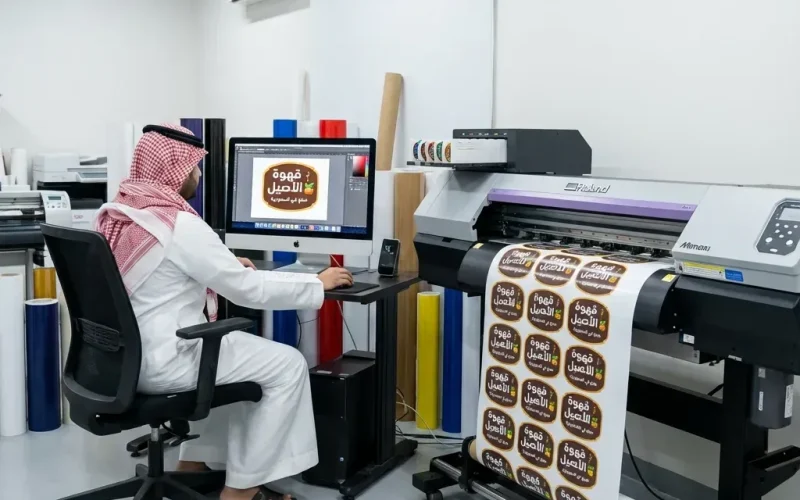
Sticker Printing: Modern Techniques and Advanced Materials to Enhance Visual Identity. In today’s fast-paced marketing world, traditional tools alone are no longer enough to capture customer attention. The printing industry has evolved amazingly, and “stickers” have become one of the most powerful marketing tools relied upon by both major and emerging brands. A sticker is not just a sticky piece of paper; it is an ambassador for your brand that adheres to your customers’ products, laptops, and cars, carrying your message to places your digital ads might not reach.
In this comprehensive guide, we will dive deep into modern sticker printing techniques, review advanced materials that have changed the game, and explore how this art integrates with other visual identity essentials like Business Card Design and paper prints to create a complete mental image.
Evolution of Printing Technologies: From Traditional to Digital
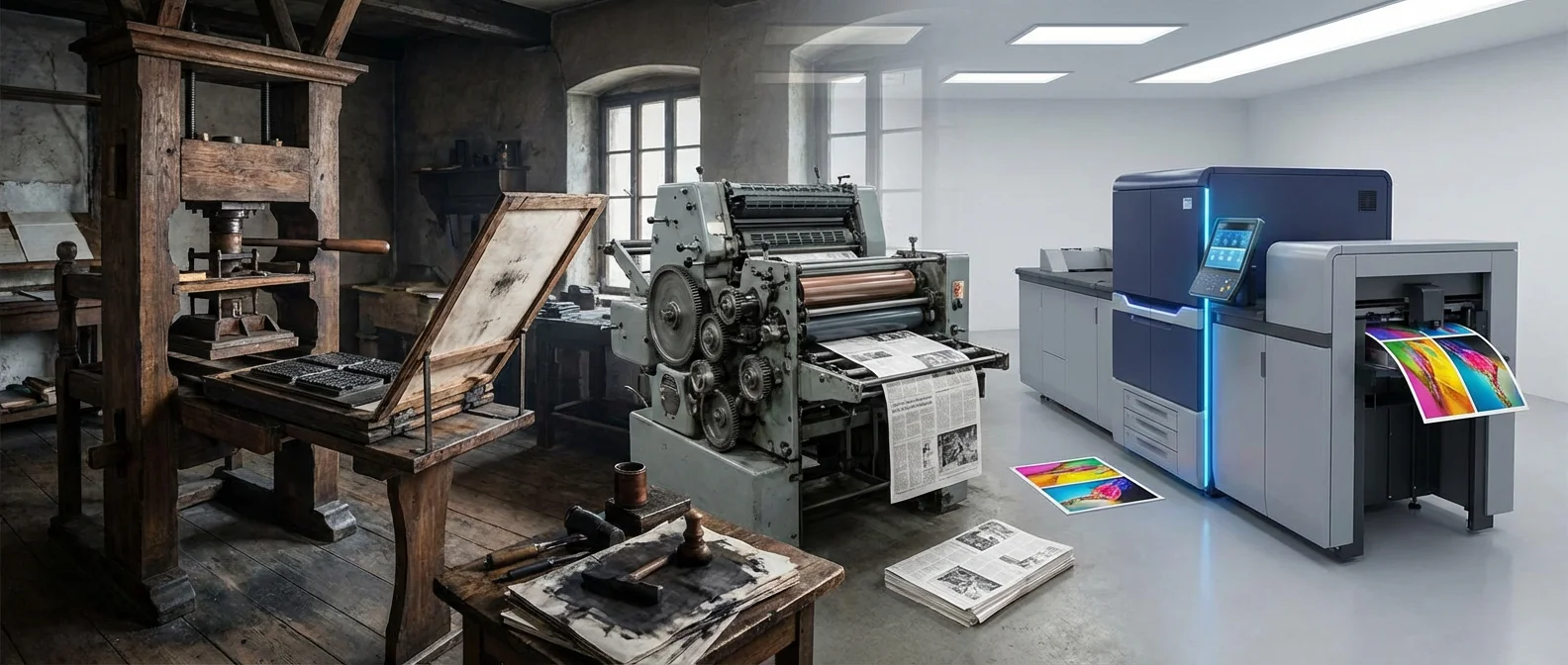
The last decade has seen a qualitative leap in printing technology. In the past, options were limited to offset printing (for large quantities) and primitive digital printing. Today, modern technologies give us infinite precision and amazing customization options.
1. High-Definition Digital Printing
Digital printing is the ideal choice for medium and small quantities. This technology is characterized by speed and flexibility, as it does not require printing plates like offset. What distinguishes modern printers is their ability to match “Pantone” colors with high accuracy, ensuring that the color of your logo on the sticker is the same as on your company’s Business Card Design. This color uniformity is the secret to a successful visual identity.
2. Flexography
This technique is widely used in printing packaging labels (Rolls) in massive quantities. It is ideal for factories and production lines. Modern developments in flexo have allowed the use of eco-friendly water-based inks and UV Curing to ensure color stability for many years.
3. Electronic Cutting (Die-Cut & Kiss-Cut)
The shape of a sticker is no longer confined to a square or circle. Thanks to laser cutting machines and digital plotters, we can now get stickers cut with extreme precision around the edges of the design, no matter how complex. This cutting precision requires high-quality vector files, just as the process of Business Card Design requires precision in dimensions and margins to ensure the final product comes out professionally.
Advanced Materials: More Than Just Paper

Choosing the raw material (Substrate) determines the lifespan of the sticker and where it is used. The market today is full of materials beyond traditional paper, designed to withstand the harshest conditions.
Comparison Table of Common Sticker Materials
| Material Type | Key Features | Best Use | Durability |
| Vinyl | Water, sun, and scratch resistant; very flexible | Cars, outdoor facades, equipment | Very High (3-5 years) |
| Polypropylene (BOPP) | Oil and moisture resistant, thin and strong | Cosmetics, food, beverages | High |
| Paper | Economical, easy to write on, natural texture | Inner packaging, gifts, barcodes | Medium (for indoor use) |
| Holographic | Light-reflective, color-changing, luxurious look | Security labels, exclusive products | High |
| Clear | Shows product background, “borderless” look | Bottles, glass windows | High |
When choosing the material, you must think about the environment the sticker will live in. Will it be placed in a refrigerator? Will it be exposed to the scorching sun? The right choice raises the value of your product. Just as you choose cardstock with a specific weight (GSM) in Business Card Design to give an impression of luxury, choosing thick vinyl for a sticker gives the same impression of quality and durability.
The Complementary Relationship: Stickers and Business Card Design
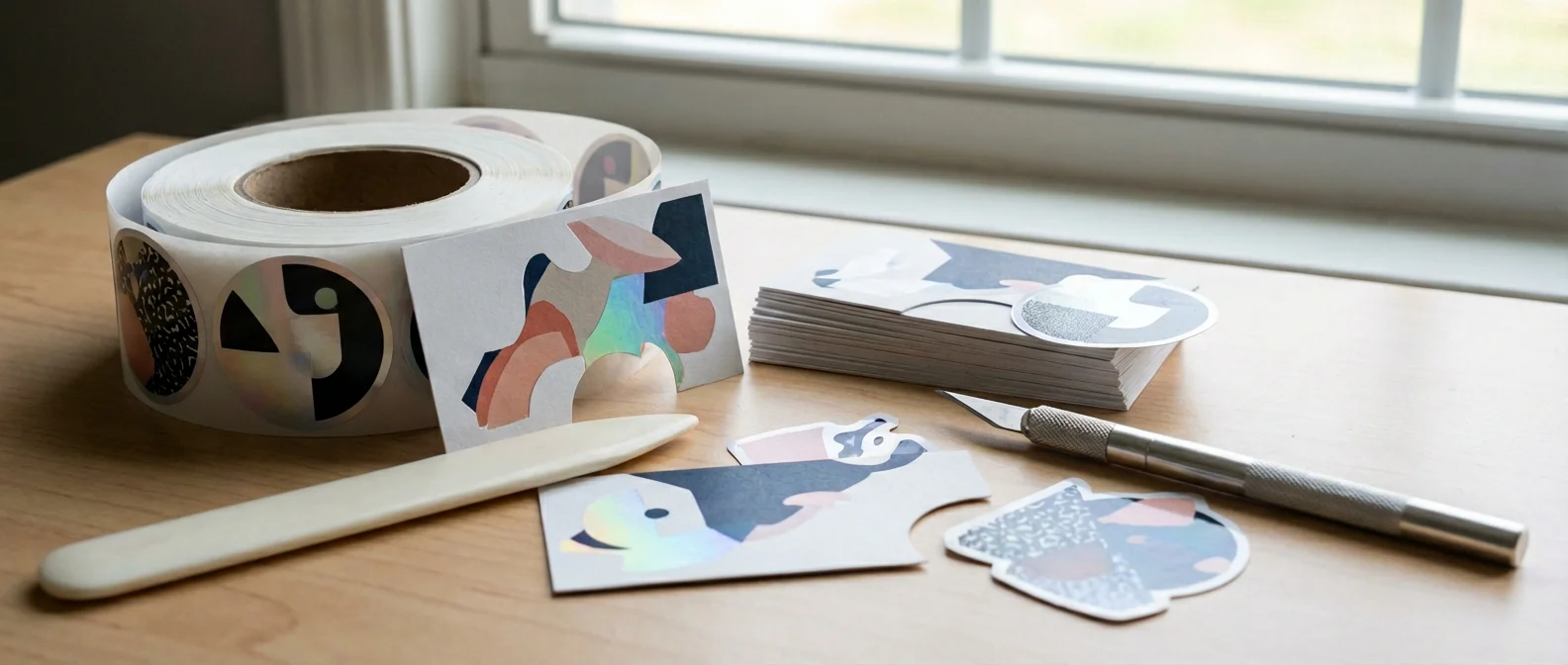
Some might wonder: What is the relationship between sticker printing and personal cards? The answer lies in “User Experience” and “Visual Consistency.”
When a customer receives a package from you, the first thing they see is the sticker on the wrapping. When they open the package, they find the product and, next to it, the business card. If there is a clash between the quality and colors of the sticker and the style of the enclosed Business Card Design, it sends a negative message of unprofessionalism.
Therefore, marketing experts recommend the following:
-
Unified Fonts and Colors: Use the same color palette in both mediums.
-
Use the Same Finishes: If you use “Spot UV” in your Business Card Design to highlight the logo, try using the same technique in your luxury packaging stickers.
-
Unified Message: The logo and data must be readable and clear in both.
Finishing Techniques: The Magic Touch
After printing comes the finishing stage, which transforms the sticker from a mere print into an art piece. These techniques add texture and visual dimension that attract the customer to touch the product.
-
Lamination: An extra protective layer (Matte or Glossy). “Matte” gives a soft, elegant look and prevents strong light reflection, while “Glossy” makes colors appear more vibrant and saturated.
-
Foil Stamping: A technique using heat to apply metallic foil to the sticker. This is very common in luxury products, and we often see it integrated into the Business Card Design of executives to reflect sophistication.
-
Embossing: Raising specific parts of the design to be palpable to the touch.
-
Spot UV: Applying a thick, glossy layer over specific areas (like the logo) on a matte background, creating stunning contrast.
Table: Effect of Finishing Techniques on Consumer Perception
| Finishing Technique | Psychological and Visual Effect | General Impression |
| Matte Lamination | Calmness, sophistication, seriousness | Modern and elegant product |
| Glossy Lamination | Energy, vitality, attention-grabbing | Consumer, youthful product |
| Soft Touch | Luxury, velvety softness | Premium (Expensive) product |
| Gold Foil | Wealth, authenticity, high quality | Classic or luxury product |
Technical Considerations for Best Print Quality
To get professional stickers, work must start at the design stage on computer software. There are common mistakes novice designers make that lead to printing disasters.
Key Technical Standards:
-
Color Mode (CMYK): Files must be designed in CMYK, not RGB. Screens display colors with light (RGB), while printers use ink. Failing to convert will lead to faded colors. This principle is the golden rule in the printing world, whether you are working on a huge billboard or preparing a file for Business Card Design.
-
Resolution: Image resolution should not be less than 300 DPI (Dots Per Inch). Low-quality images will appear pixelated and unclear.
-
Bleed: This is extra space around the design (usually 3mm) that gets cut off after printing. Without Bleed, unwanted white edges might appear around the sticker if the cutting shifts even a millimeter. This rule applies literally when preparing Business Card Design files for the press as well.
-
Fonts: Converting text to curves (Outlines) is necessary to avoid font change issues when opening the file at the print shop.
Stickers as an Effective Marketing Tool (Guerrilla Marketing)
Stickers are considered tools of “Guerrilla Marketing.” Their cost is low compared to their impact. Distributing attractive stickers for free with orders encourages customers to stick them on their personal belongings, turning them into moving billboards for your brand.
Imagine a scenario: A customer buys a laptop and puts your company’s sticker on it. Every time they open their device in a cafe or meeting, people see your logo. This type of constant exposure builds familiarity with the brand. To reinforce this effect, you must always be ready to provide your contact information through other tools, and here comes the role of having a professional Business Card Design to distribute at events where people might ask about that distinctive sticker.
Types of Adhesives
Not all glue is the same. Choosing the adhesive type depends on the purpose:
-
Permanent Adhesive: Sticks strongly and is hard to remove without leaving residue (used for packaging and industrial labels).
-
Removable Adhesive: Can be removed easily without tearing the paper or leaving residue (used for temporary offers and glass).
-
High Tack Adhesive: Designed for difficult surfaces like concrete or rough plastic.
Printing Sustainability and the Future
The world is moving towards sustainability, and the printing industry is no exception. Biodegradable materials and vegetable-based inks have become a basic requirement for many companies.
Stickers made from recycled paper or bio-materials give a positive impression of your company’s commitment to the environment. This ethical commitment has become an integral part of visual identity and can also be expressed by using recycled paper in Business Card Design and official company prints.
Conclusion: Details Make the Difference
Sticker printing is no longer just a subsidiary process; it is a science and art that requires knowledge of materials, techniques, and design methods. Caring about the quality of the sticker reflects your care for the quality of the product it carries.
Always remember that visual identity is an interconnected chain of elements. You cannot invest in expensive stickers and neglect other aspects. Success lies in the balance and integration between product quality, packaging magnificence, sticker beauty, and the professionalism of Business Card Design and official correspondence.