 العربية


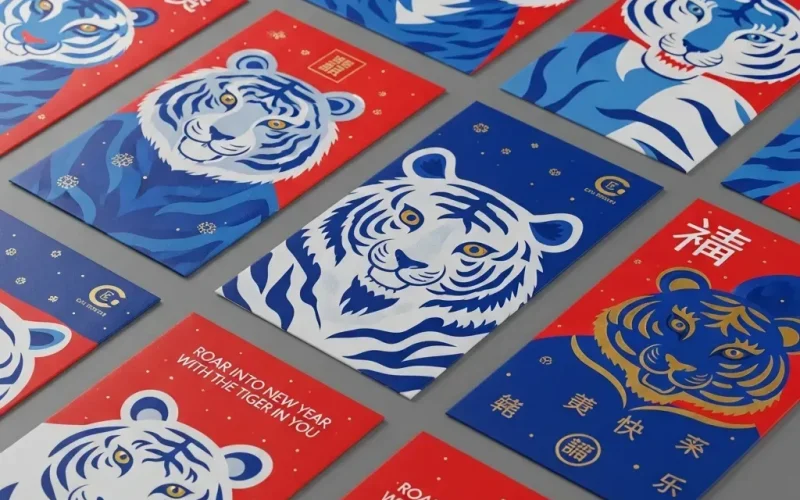
The process of correspondence, whether commercial or personal, begins and ends with its cover. This cover, known as envelopes, is not just a container for documents; it is the initial calling card for your message and professionalism. In the modern business world, where competition is fierce and the first impression is unforgettable, choosing the right type of envelope types and utilizing them optimally is both an art and a science.
Whether you are planning a massive marketing campaign, sending official invoices, or even luxurious wedding invitations, understanding the technical and aesthetic properties of each envelope type ensures your message arrives safely and in a manner befitting its contents.
This comprehensive article will take you on a detailed tour to explore 10 major envelope types, analyzing their optimal uses, design and printing considerations, and how to ensure compliance with modern postal and search engine standards.
Why Is Choosing the Right Envelope Type Crucial?
Often, **envelopes** are viewed merely as a secondary operational cost, but they actually play a pivotal role in:
- Protection and Security: Ensuring the content arrives intact and undisclosed.
- Professionalism and Branding: A well-designed envelope enhances the company’s credibility and leaves a positive impression.
- Postal Compliance: Using the correct size and shape ensures the mail is not rejected or delayed, and reduces shipping costs.
- Sorting Speed: Certain **envelope types** designed with a window allow for quick automated sorting, speeding up the processing time.
Envelope Classification: Dimensions and Key Features
**Envelopes** are classified globally according to their dimensions and usage, often named using the International Size System (such as C4, C5, DL) or the American System (such as #10, A7). Before diving into the ten types, it is essential to understand the most common dimensions.
| Size Code (ISO) | Dimensions (mm) | Description and Typical Use |
|---|---|---|
| DL (Dimension Long) | 110 × 220 | Standard commercial envelope (official correspondence and invoices). Fits an A4 sheet folded in thirds. |
| C6 | 114 × 162 | Small envelopes for postcards or personal correspondence. |
| C5 | 162 × 229 | Fits an unfolded A5 sheet or an A4 sheet folded once. Ideal for medium-sized correspondence. |
| C4 | 229 × 324 | Fits an unfolded A4 sheet. Used for important documents that should not be folded (e.g., certificates or contracts). |
| B4 | 250 × 353 | Larger than C4, used to protect large documents or sets of printed materials. |

The Ten Major Envelope Types and Their Optimal Uses
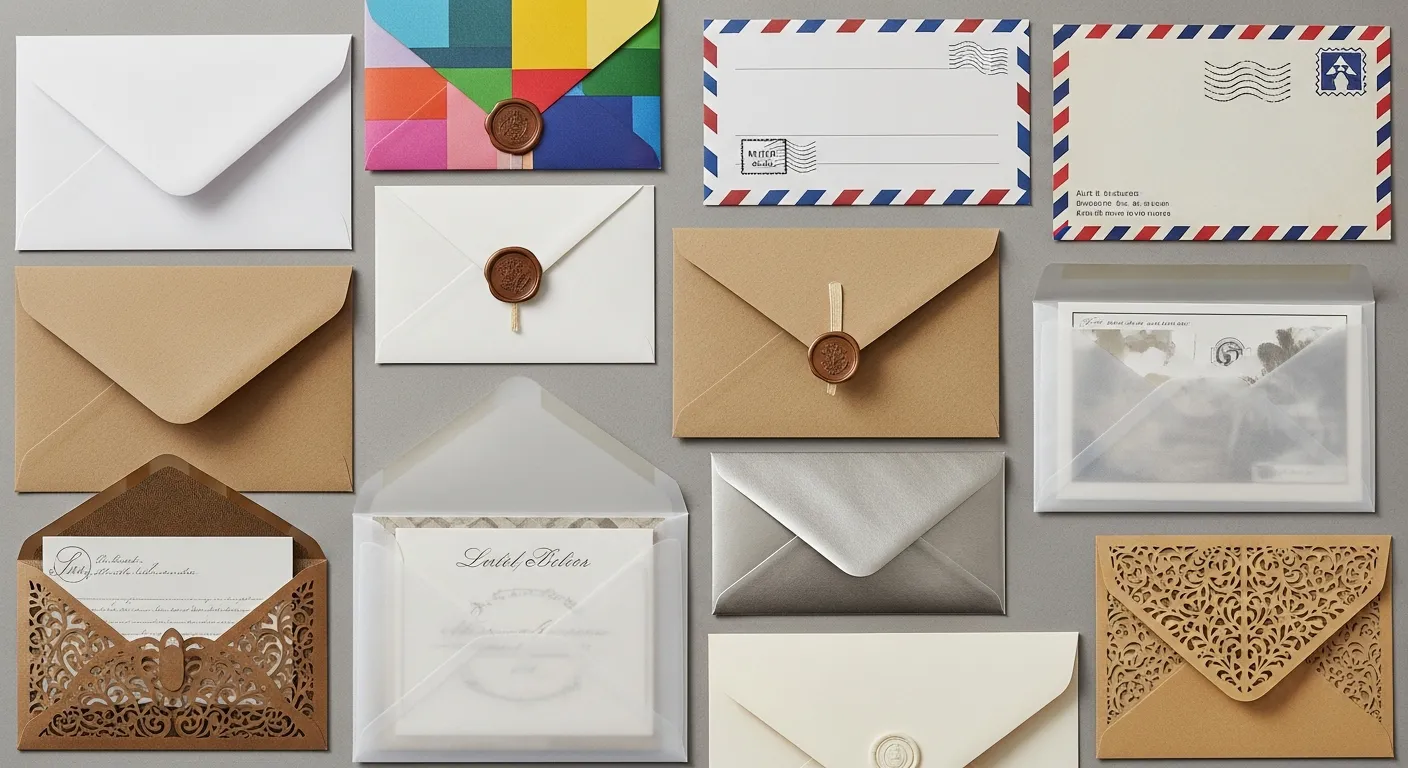
Each of the following ten **envelope types** possesses unique characteristics that make it ideal for a specific function:
1. Standard Commercial Envelope (#10 or DL)
Optimal Use: Daily correspondence, invoices, checks, and formal business letters.
This is the most common type in office environments. It features a long rectangular shape (usually DL or #10). This envelope’s design is focused on efficiency, often coming with a self-seal strip to speed up the packing process.
2. Window Envelopes
Optimal Use: Invoices, statements, financial data, and high-volume correspondence.
These envelopes are an efficient solution for reducing errors and saving time in large mailing operations. They feature a clear plastic window, allowing the recipient’s address—already printed on the internal document—to show through. This eliminates the need to print or manually write the external address label.
3. Business Reply Envelopes (BRE)
Optimal Use: Surveys, fundraising, subscription requests, or any process requiring a swift response from the customer.
These envelopes are specifically designed to encourage the recipient to reply. They are prepaid by the sending company and often come with a “do not pay upon sending” design to simplify the process for the customer. This type is essential for direct marketing campaigns that measure response rates.
4. Catalog Envelopes
Optimal Use: Sending magazines, catalogs, large brochures, or annual reports.
What distinguishes this type is that the flap (closure flap) is on the short side of the envelope rather than the long side. This design makes it easier to insert large, heavy, or multiple items horizontally or vertically, and provides additional sealing strength.
5. Booklet Envelopes
Optimal Use: Sending promotional materials that require a more formal look than a catalog envelope, such as university acceptance packets or business reports.
Unlike catalog envelopes, the closure flap on booklet envelopes is along the long side. This gives the envelope a flat, neat appearance, making it ideal for documents that must remain flat and unfolded.
6. Square Envelopes
Optimal Use: Luxurious invitations, creative promotional cards, greeting cards.
Square envelopes are characterized by their high visual appeal, which breaks the traditional shape mold. However, it should be noted that many postal services may charge extra fees for this non-standard shape because it does not fit automated sorting equipment.
7. Padded and Bubble Envelopes
Optimal Use: Sending fragile or sensitive items, such as flash drives, small gifts, electronic accessories, or jewelry.
These are among the most important specialized envelope types for protection. They are lined with a layer of air bubbles or foam materials to absorb shocks during transport. The padded envelope should be chosen in a size that fits its contents precisely to ensure maximum protection.
8. Announcement Envelopes (A-Series)
Optimal Use: Wedding invitations, thank you cards, birth announcements, elegant correspondence.
These envelopes come in a wide range of sizes (A1 to A10) and are designed specifically for occasions. They feature a triangular or pointed flap, and are often used with heavy or textured paper stock to enhance the sense of quality and formality.
9. Policy Envelopes
Optimal Use: Storing and distributing insurance documents, long legal documents, or contracts.
These envelopes are long and narrow, designed to fit legal-sized papers folded once, providing an organized format for storing important documents that need to be kept for long periods.
10. Interoffice Mail Envelopes
Optimal Use: Transporting documents between departments and sections within the same organization.
These envelopes are designed to be reused many times. They feature several blank lines for writing the sender’s and new recipient’s names each time they are used. They are often made of durable paper or cloth to withstand repeated use, and come with a string tie or clasp instead of permanent adhesive.
Technical Considerations: Professional Envelope Printing
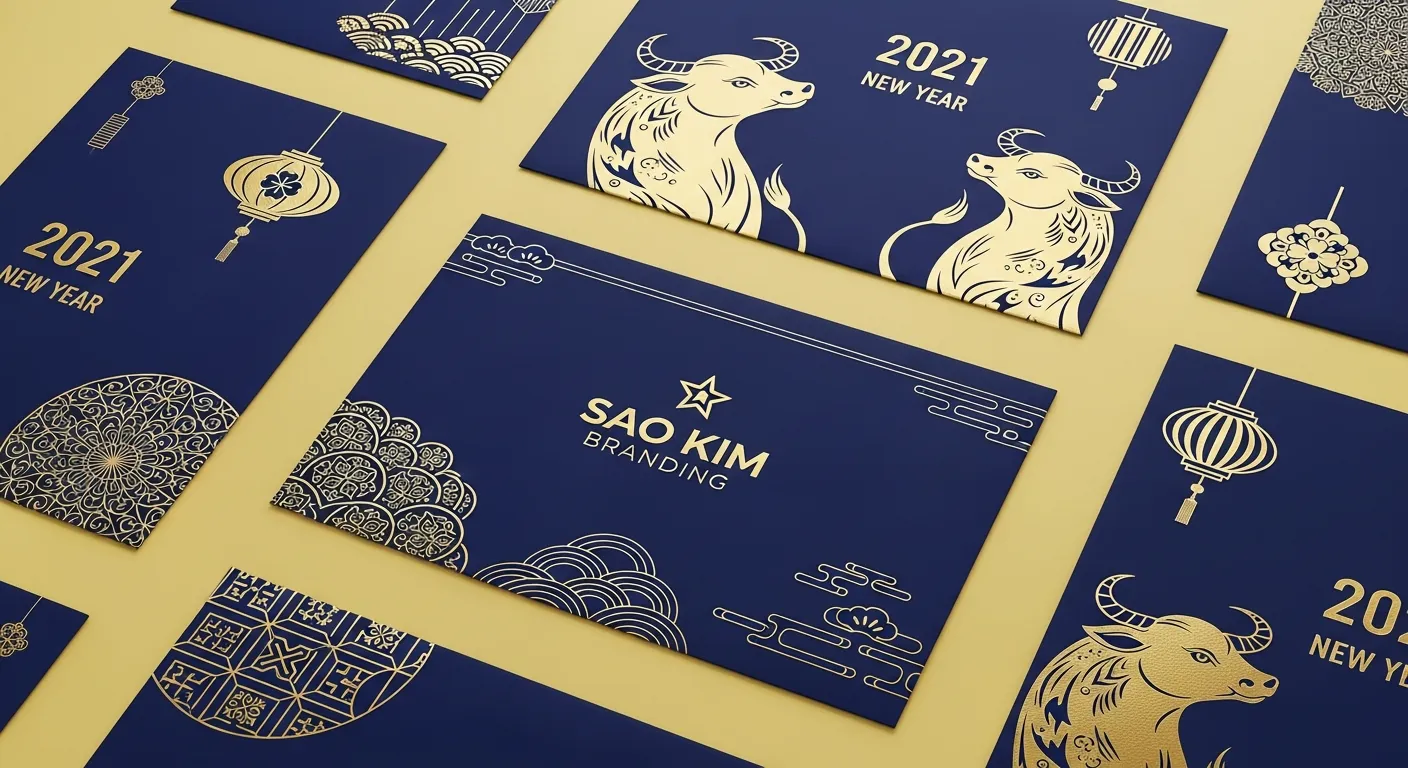
Simply choosing the envelope type is not enough; the quality of branded **envelope printing** is what leaves the final impression. Professional **envelope printing** requires meticulous attention to materials, sealing methods, and printing techniques to ensure clarity and durability.
Challenges in Envelope Printing:
- Handling Seams: The internal envelope seams (overlapping layers) can cause issues when the envelope passes through high-speed commercial printers.
- Paper Quality (Weight): The paper must be sturdy enough to withstand the postal sorting process but flexible enough to pass through the printing machine.
- Envelope Color: Dark colors affect the clarity of ink printing (especially postal addresses, which must be clear for automated reading).
| Standard | Standard Commercial Envelope (DL) | Official Envelope (C4/C5) | Invitation Envelopes (A-Series) |
|---|---|---|---|
| Recommended Paper Weight (gsm) | 80 – 100 | 90 – 120 | 120 – 150 (or heavier) |
| Common Printing Technique | Offset (Large Volumes), Laser (Small Volumes) | Offset or Digital Printing | Embossing, Foil Stamping |
| Preferred Seal Type | Self-seal or Moistenable Glue | Peel and Seal Strip | Moistenable Glue or Sealing Wax |
Full-Color vs. Monochrome Envelope Printing
When large companies run major marketing campaigns, they often choose **full-color envelope printing** (CMYK) to ensure the company logo stands out clearly. However, for everyday correspondence, monochrome printing (using approved brand colors) may be the more cost-effective option.
Investing in high-quality envelope printing reflects professionalism. You must always ensure that the spaces allocated for the sender’s address and recipient’s address comply with local postal service standards to avoid rejection.
Conclusion and Tips for Choosing the Best Envelope Types
To achieve optimal use among the available **envelope types**, you should follow a systematic process based on the content type and destination. Using the correct envelope not only saves money on non-standard postal fees but also enhances your brand image.
Envelope Selection Checklist:
- Content and Size: Does the document need to be folded? If an A4 sheet should remain flat, choose a C4 envelope. If it is folded in thirds, choose a DL envelope.
- Security and Protection: If the content is fragile or sensitive (like a memory card), choose Padded **envelopes**.
- Professionalism and Aesthetics: For special occasions and invitations, invest in A-Series **envelopes** with an elegant flap.
- Cost and Efficiency: For routine high-volume invoice mailings, use Window **envelopes** to save addressing time.
The great variety in **envelope types** serves one goal: ensuring your message arrives correctly, safely, and professionally. Whether you manage a small office or a mailroom in a global corporation, mastering this aspect of correspondence is an integral part of operational efficiency and commercial success.
Comprehensive Comparison Table of Uses and Features
| Envelope Type | Primary Purpose | Key Features | Approximate Cost (Compared to DL) |
|---|---|---|---|
| Standard Commercial (#10/DL) | Daily Business Correspondence | Efficient, Standard, Widely Available | Reference (1.0) |
| Window Envelopes | Invoices and Statements | Speeds up addressing, reduces errors | Slightly Higher (1.2) |
| Catalog Envelopes | Magazines and Brochures | Flap on the short side, high durability | Medium (1.5) |
| Padded Envelopes | Protecting Fragile Items | Internal bubble or foam padding | High (2.5) |
| Announcement Envelopes | Wedding and Event Invitations | Elegant shape (V-flap), premium materials | Higher (3.0) |
In conclusion, the envelope remains the interface for any written communication. Choosing the right **envelopes**, investing in high-quality **envelope printing**, and intelligently distributing **envelope types** across various mailing tasks will ensure your success in achieving effective and professional communication.