 العربية



Meta Description: A practical guide explaining how to create a professional flag through clear steps, from defining the goal and building the concept to choosing colors and testing the final result, in a style suitable for Arab audiences and optimized for search engines.
When any entity, institution, team, event, or even a startup project thinks about having a strong visual identity, the first thing that gives it an immediate presence in people’s minds is a clear visual symbol. This is where flag design becomes an important decision, because it is not limited to aesthetic appearance alone, but also reflects a message, values, belonging, and a concise way of communicating with the audience. A good flag succeeds because it is simple, memorable, and able to express the idea without lengthy explanation.
Many people think that creating a professional flag simply means choosing two colors and placing a shape in the middle, but the truth is that the process goes much deeper than that. A successful flag is built on a precise understanding of identity, the nature of the audience, the usage environment, and the space in which it will appear, whether on buildings, at events, on printed materials, or across digital platforms. For this reason, the process requires a clear method rather than random decisions.
In this article, you will find eight practical steps that begin with the idea and end with a ready-to-implement version. You will also learn about the key standards that make the result truly professional, as well as the most common mistakes that weaken a flag’s visual value no matter how good the idea may be. The goal here is not only to achieve a beautiful design, but to create a banner that genuinely represents the entity it stands for and remains convincing in the long term.
Why does a project need a well-planned flag design?

A flag is not a secondary element in an identity; it is a powerful tool of visual shorthand. It brings together the story, message, and values in a very limited space, which is exactly what makes it so impactful. When a flag is thoughtfully designed, it raises the level of trust, makes the entity easier to recognize, and creates a sense of coherence across events and promotional materials. But when it is weak, crowded, or unclear, it confuses the audience and reduces the overall sense of professionalism.
To better understand the importance of proper planning, look at the following table:
| Element | Result When Done Well | Result When Neglected |
|---|---|---|
| Clarity of the idea | Easy to remember and quick to understand | Visual ambiguity and a weak impression |
| Simplicity of composition | Ease of printing and usage | Difficult execution and loss of detail |
| Color selection | Strong and cohesive identity | Visual conflict or unsuitable meaning |
| Symbolism | Emotional and meaningful connection | A beautiful shape without real meaning |
| Applicability | Success in real use and on screens | Problems with sizes and materials |
1) Define the goal before starting the flag design
The first real step is to ask: why do we need this flag in the first place? Is the goal to represent an institution, an event, a community, a team, or a seasonal campaign? The answer determines everything that follows. A flag that represents a youth club is different from a cultural event flag, and both differ from a banner for an official initiative or a commercial project.
Before drawing any line or choosing any color, define these points:
- The audience that will interact directly with the flag.
- The environment where it will appear: a public square, building, hall, digital platform, or printed materials.
- The message that the flag design should communicate to the audience.
- The nature of the identity: formal, youthful, heritage-based, modern, or celebratory.
- The duration of use: temporary or long-term.
This stage prevents you from falling into the trap of creating a beautiful shape that does not serve the purpose. The more clearly the goal is defined from the beginning, the easier and more precise the following decisions become.
2) Collect symbols and meanings associated with the identity
After defining the goal, the research phase begins. Here, you do not need to copy ready-made ideas, but rather to build a reference base that helps you develop an original concept. Look for the entity’s core values and the symbols connected to it culturally, historically, or functionally. These symbols may be related to place, field of work, heritage, or even the mission the entity carries out.
At this stage, it is important to distinguish between a useful symbol and an unnecessary one. Not every meaning has to be included in the flag. In fact, it is better to choose only one or two symbols, as long as they are clear and visually simple. Too many references within a small space weaken the message rather than strengthen it.
You can ask yourself here:
What value do we want to highlight first?
What symbol can represent it with the least amount of complexity?
And can the audience understand it quickly even if they see it from a distance?
3) Choosing colors and building identity in flag design
Colors are not merely decoration, but a language in themselves. A color can suggest strength, trust, peace, belonging, or vitality. Therefore, a limited and balanced color palette should be selected instead of using too many colors that strip the flag of its dignity and blur its image.
The success of a flag design is often linked to restraint in color usage. Two or three colors are more than enough in most cases, provided their relationships are clear. Contrast must also be considered, because the flag may sometimes be seen from long distances or under different lighting conditions.
The following table explains common meanings of some widely used colors:
| Color | Common Associations | When It Is Suitable |
|---|---|---|
| Blue | Trust, stability, calmness | For institutions, initiatives, and official bodies |
| Red | Strength, enthusiasm, boldness | For events, teams, and symbols with a strong presence |
| Green | Growth, nature, balance | For environmental, social, or heritage initiatives |
| Black | Prestige, seriousness, luxury | When a strong and formal character is needed |
| White | Clarity, peace, simplicity | As a background or balancing element that reduces clutter |
| Yellow or Gold | Energy, brightness, value | When emphasizing distinction or a celebratory feel |
When selecting colors, do not rely only on their general meanings. Also consider their relationship to local culture, the entity’s current identity, and how easily they can be executed on fabric and in print.
4) Draw a simple composition that is easy to recognize
After determining the meanings and colors, composition comes next. By composition, we mean how the elements are distributed within the flag’s space: will there be horizontal lines, vertical lines, a central area, a symbol in the middle, or one solid color block? At this stage, the idea begins to turn into form.
The golden rule is simplicity. A flag should not behave like a logo full of tiny details, because it is seen from afar, moves in the wind, folds, and is printed in different sizes. Therefore, the composition should remain clear even if some details disappear. Every element should have a reason to exist, and every shape should serve the message rather than compete with it.
A good composition achieves three things:
First, it guides the eye quickly.
Second, it creates comfortable visual balance.
Third, it preserves the flag’s identity even when reduced in size or in motion.
5) Choose one strong symbol instead of several competing ones
One of the most common mistakes is trying to place everything inside one banner: the entity’s name, a historical symbol, a geometric shape, multiple colors, more than one frame, and perhaps even the founding date. This method weakens the message. A strong flag does not over-explain; it suggests intelligently.
Choose one visual symbol that can carry the main idea. This symbol could be a star, a geometric shape, a simplified heritage element, or a mark related to the field. What matters is that it is clear, uncomplicated, and easy to draw.
Distinctiveness does not come from having many elements, but from making the right choice. The fewer the elements, the greater the chance the flag will remain in memory. That is why the most enduring flags are those based on a limited structure with a very powerful effect.
6) Test the flag design on different sizes and materials
Many ideas look excellent on screen, but lose their strength when printed or hung in the air. So do not stop at the first digital version. Test the result in more than one application: a small version, a large version, a light background, a dark background, fabric, paper, and digital display.
This step is essential because some thin lines may disappear, some contrasts may weaken, and some colors may change in intensity during actual production. A symbol may also look balanced when static, yet become unclear when the fabric moves.
It is useful here to review these points:
- Can the main elements be recognized from a distance?
- Does the shape remain clear when reduced in size?
- Do the colors maintain their balance in print?
- Does the meaning remain present even if the flag is seen quickly?
- Does the flag still look strong when raised or partially folded?
If the answer is yes to most of these questions, then you are getting close to a successful version that is ready for real use.
7) Refine the details and remove everything that does not serve the idea
The first version is rarely the final one, and that is completely normal. Professional work requires refinement. At this stage, do not add new elements unless absolutely necessary. Instead, try removing first. Ask yourself: can this symbol be simplified? Is this spacing necessary? Does this extra color support the message or distract from it? Is the border shape appropriate or excessive?
Good refinement is what transforms an idea from “acceptable” into “convincing.” Sometimes the difference between an average flag and an excellent one is just a simple adjustment in proportions, the thickness of one element, or the arrangement of color blocks. So do not treat revision as a secondary phase, but as an essential step that creates the final quality.
8) Approve a final version with clear usage standards
Once the design is complete, the most important practical part remains: locking the final version and establishing rules for its use. This means standardizing the colors, preserving the proportions, and specifying what is allowed and what is not allowed across different applications. Any later tampering with the colors or element distribution can weaken the identity and create confusing versions.
It is best to adopt a clear reference that includes:
- The approved ratio of flag length to width.
- The primary colors and alternative colors when needed.
- The spacing around the symbol or composition.
- The version suitable for printing and the version suitable for digital use.
- The situations in which change, cropping, or addition must be prohibited.
This step turns the flag into a stable asset rather than just a replaceable idea, and protects it from random usage over time.
Common mistakes in flag design that should be avoided
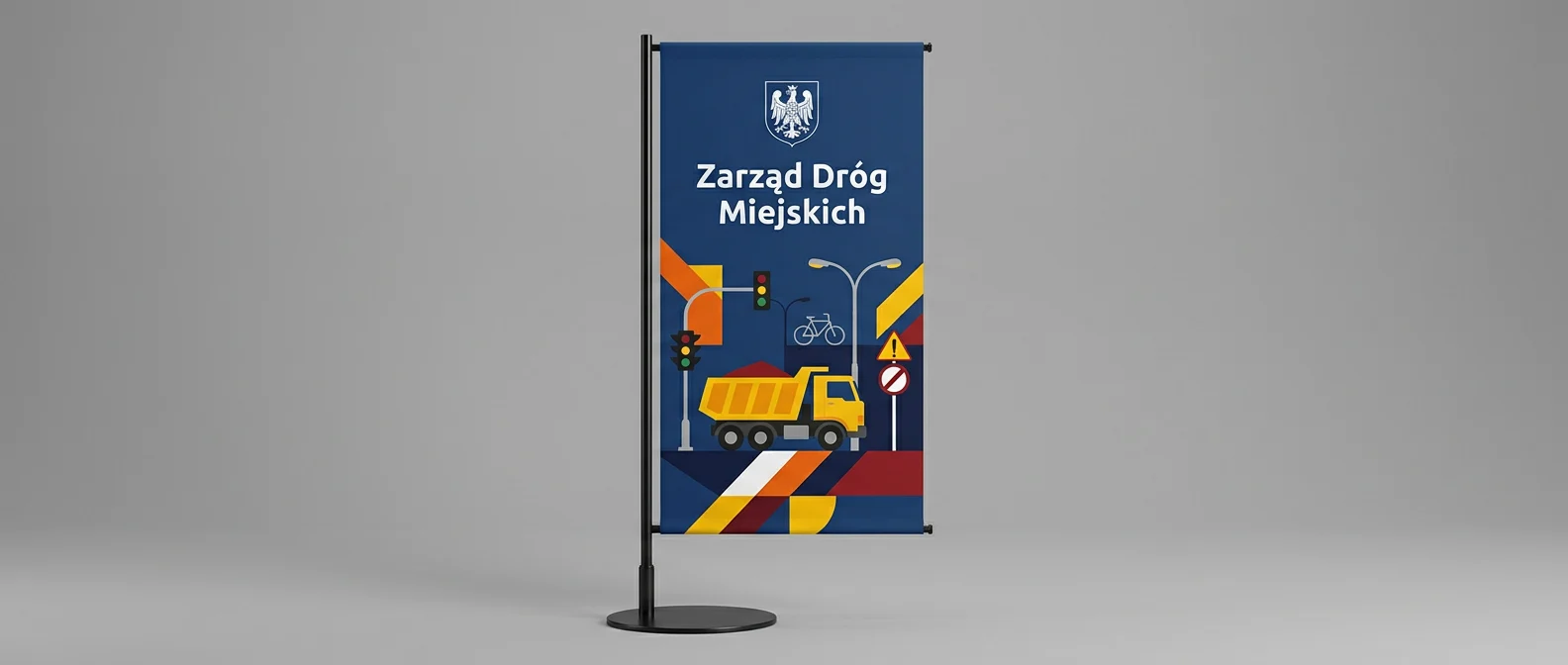
Despite the clarity of the previous principles, some mistakes are repeated frequently and lead to weak results even when the intention is good. The most prominent of these mistakes is overloading the flag with more than it can bear, whether in terms of meanings, details, or decoration. Another mistake is directly imitating other flags, because this strips the work of its personality and makes it look dull or ambiguous.
Other important mistakes include:
- Using too many colors without need.
- Including small elements that cannot be seen from a distance.
- Relying on complex details that are difficult to execute.
- Ignoring the nature of the material or the usage environment.
- Making the final decision without real-world testing.
Almost every successful flag goes through a phase of deletion, simplification, and review, so do not become attached to the first version no matter how attractive it seems. The real standard is clarity, not the amount of effort spent on drawing.
How can you make the result more convincing for Arab audiences?

When the audience is Arab, it is important to consider local visual and cultural sensitivity. This does not mean being overly literal or using heritage elements in a stereotypical way. Rather, it means respecting the context and understanding what leaves a positive impression on the viewer. Arab audiences appreciate clear symbolism, color harmony, and a message that carries meaning rather than mere decoration.
Make sure the banner feels understandable, respectful, and modern at the same time. Instead of overcrowding it with references, try to create a balance between authenticity and simplicity. A flag that succeeds in the Arab context is not only one that looks beautiful, but one that people feel is close to their identity and capable of representing them with dignity and clarity.
Conclusion
In the end, a professional flag design does not emerge by coincidence, but from understanding the goal, choosing the right meaning, building a simple composition, testing the result in reality, and then reviewing it until you reach the best possible version. The clearer, more disciplined, and more closely tied to identity the flag is, the greater its chances of succeeding and making a lasting impact.